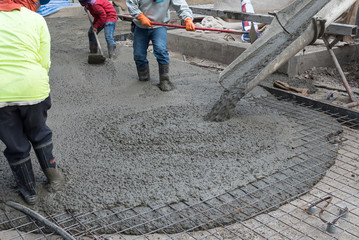
Whether you’re building your own home driveway or managing a commercial construction job, the right concrete mix is essential. The best concrete mixes are tailored to specific project requirements, optimizing material usage.
Understanding what factors determine the ideal concrete mix for your construction needs helps you achieve superior results. This guide explores the most important considerations, from load-bearing capabilities to environmental conditions and more. Contact Concrete Franklin TN for more details.
Strength
Concrete is one of the most versatile construction materials available, and it can be used for projects of any size. However, choosing the right concrete mix is essential to ensure that your project is built to last without wasting time or money.
The strength of a concrete mix is determined by the proportions of its dry ingredients, including sand, stone and gravel, and cement. The amount of water used to make the mix is also important, as it affects how fast the concrete sets and its strength.
Typically, a higher-strength mix requires more water and less cement. However, balancing the ideal mix of dry ingredients can be tricky. Too much water can result in weak concrete, while too little will cause the mix to set too quickly and lose strength.
It’s also important to consider the type of force that will be applied to the concrete during its life. Concrete handles compressive forces very well, but it’s not as resilient against tensile stress, which comes from perpendicular forces pulling on the concrete. High-strength concrete can handle tensile stresses more easily, but this is only true for the most precisely mixed and placed concrete.
The best way to guarantee that a concrete mix is strong enough for a particular application is to use a pre-mixed concrete that has been tested by an accredited lab. The testing process includes a Modulus of Elasticity (MOE) test, which is complex and time-consuming. Not all laboratories are equipped to perform these tests, so it’s important to select an experienced concrete supplier who can provide high-quality, accurate results.
In addition to ensuring that the concrete you’re using is high-strength, you can enhance its performance by selecting the right admixtures and curing techniques. For example, air-entraining admixtures help to increase the strength of concrete by reducing permeability, and selecting high-quality aggregates helps to improve workability and durability.
Durability
A concrete mix’s durability is a vital factor in its success. Its ability to withstand environmental and mechanical stresses over time reduces the need for repairs and replacements, lowering lifecycle costs. To maximize concrete’s longevity, engineers should consider the load-bearing capacity, environmental conditions, construction practices, and maintenance and repair strategies. Incorporating sustainable materials and advanced admixtures into concrete helps boost its performance and durability.
Concrete mix design is a crucial element in the longevity of any concrete structure. For instance, choosing the right ratio of sand to aggregate improves concrete’s strength and stability. Mixing the dry ingredients properly ensures that all particles are evenly dispersed and activated. Adding water slowly ensures that the mixture is thick enough to be poured. This prevents overheating and weakening the mixture.
The right concrete mix also determines how long it takes for the concrete to set and harden. For projects with tight timelines, choosing a rapid-setting or fast-curing concrete mix is essential. Moreover, selecting a concrete with a low slump value makes it easier to work with for difficult-to-reach areas or intricate forms.
Whether it’s a foundation, driveway, or flooring project, the type of concrete you choose can have a significant impact on your finished product. Selecting a commercial concrete mix that meets your technical requirements and budget constraints is essential for the longevity of your project.
Start by classifying the exposure conditions of your structure, as a column in a coastal environment faces different challenges than an interior slab. Next, engineer-approved specifications should be established, including the maximum water-to-cement ratio, minimum cement content, type and percentage of SCMs, target air content, and required strength. Durability tests are recommended, as well, to verify that the chosen commercial concrete mix maintains integrity under expected environmental conditions.
Aesthetics
Concrete is more than cement, sand, and aggregate; it’s a meticulously engineered material with precise proportions and ingredients that determine its strength, durability, and workability. Selecting the right mix is a critical step in construction, but it’s also an opportunity to create a unique aesthetic. Tailoring ready-mix concrete involves customizing mix proportions, incorporating specialty additives, and adjusting workability levels to achieve specific specifications like ideal compressive strength and durability.
The first step in selecting the right concrete mix is to understand the requirements of your project. This includes identifying the type of load-bearing capacity needed and environmental conditions to ensure that the concrete can withstand these demands.
You also need to consider how the concrete will be used, as this will impact its workability and durability. For example, commercial and industrial projects often require high-strength concrete (40-80 MPa) to support heavy equipment, vehicles, and structures that are exposed to abrasion and chemical spills over long periods of time.
When choosing the right concrete mix, it’s important to find a supplier with technical expertise and reliable delivery. They should be able to fine-tune the mix design for your project and recommend admixtures that enhance performance and increase aesthetics. They should also have a local presence to better understand regional climate and soil conditions that could affect mix performance.
Once you’ve selected the ideal concrete mix, you can begin constructing your structure. Be sure to follow all best practices for mixing, placing, and curing to ensure that your finished concrete has the strength, durability, and aesthetics you need. Ultimately, the perfect concrete mix is a fusion of artistry and scientific precision, creating a testament to human ingenuity that stands for generations to come.
Workability
Workability is the ability of a concrete mix to be handled and placed without segregation (separation of aggregates and cement). It can be affected by numerous factors, including water-cement ratio, aggregate size and shape, and additives such as plasticizers and air entrainers. High workability allows a concrete to be poured, compacted, and finished more easily, which helps reduce labor costs and project delays.
Selecting the right concrete mix for a construction project requires careful consideration of multiple factors, from strength and durability to environmental conditions and budget constraints. By working with trusted ready-mix suppliers and adhering to industry standards, contractors can mitigate risks and ensure the success of their projects.
For example, the concrete mix’s compressive strength determines its load-bearing capacity and prevents cracking and crumbling. This property is important because it enables engineers to design structures that meet structural requirements and avoid construction failures. It also reduces the amount of reinforcing steel required to support large loads, which saves money on materials and installation costs.
The concrete mix’s curing time is another factor that must be considered. It is important to choose a mix that cures at an appropriate rate for the intended application, as over-curing can lead to damage and premature failure. In addition, weather conditions must be taken into account, as extreme temperatures and freeze-thaw cycles can impact the durability of concrete.
By understanding these important factors and selecting a concrete mix that is tailored to your project, you can achieve the desired results without any surprises down the line. The right mix will not only save you time and money, but will also contribute to the longevity and safety of your construction project.
Cost
Concrete is a major investment that requires careful planning and attention to detail. Understanding the factors that influence its cost and employing practical strategies for managing expenses can help you bring your vision to life while staying within budget.
Choosing the right concrete mix is crucial for ensuring that your construction project meets structural requirements, and that it’s safe and durable for its intended use. The mix’s specific properties are determined by its combination of key components: cement, aggregates, water, and additives. The proportions of these ingredients, and mixing techniques, impact not only concrete’s strength and durability but also its cost.
Cement is the glue that holds your concrete together, while sand and gravel or crushed stone provide bulk and strength. When mixed with water, the ingredients undergo a chemical reaction called hydration to harden and bind the materials together. Adding additives such as color, accelerators, retarders, and air-entraining agents can add functionality, increase workability, and enhance durability.
The type of aggregate used determines a concrete’s density, with lighter mixes requiring less material to achieve the same strength and durability. Lightweight concrete is ideal for high-rise buildings where weight savings can improve energy efficiency, while heavyweight concrete includes denser aggregates like magnetite or hematite to meet specialized applications such as radiation shielding in hospitals and nuclear facilities.
When deciding whether to mix your own concrete or opt for ready-mix, consider the costs of equipment and labor. Ready-mix can be more costly upfront, but can save money on equipment and labor in the long run by reducing waste and increasing workflow efficiency. When selecting a ready-mix supplier, evaluate their reputation, quality control measures, delivery fleet reliability, and pricing strategies to ensure you’re getting the best value for your money.
Visit our Professional Services Blogs
West Accounting Services, Polycor Countertops, Appliance Repair Cherry Hill, Prism Power Wash, Gardner Tax And Accounting, Kitchen Remodel Cost, Sunrise Towing, Color Cork Flooring, Architectural Design Consultants, Sunny Cleaning, Solar Module Direct, Dr Mark Wiley, West Accounting Services, Visit Red Lake Region, Across America Movers, Karis Transportation, About The Bay Movers, portlandmetroautoinsurance.com, Get Healthy Again, The Wow Traveler, Tzar Travel, Technohub IT Services, Maine Business Lending, Garage Door Repair 719, St Croix Tampa, Household Inspector, Hemp Solutions, Hamilton Home Inspection, Mold Removal Remediation Experts, Nine Radiance Furnitures